


Knee osteoarthritis is a disease of the hyaline cartilage surrounding the oval-shaped protrusions of the tibia and femur.This chronic disease develops slowly and progressively, with the hyaline cartilage gradually being destroyed.In the later stages of the disease, damage can affect the joints and spread to nearby parts of the bone.
If you have knee arthritis, you can treat it at home, but before doing so, you should familiarize yourself with the basic principles.First, it is important to understand that treatment is a complex process.Treatment includes medication, diet, massage, exercise therapy and physical therapy.
Arthropathy of the knee joint is called knee arthrosis, osteoarthrosis, and arthropathy.These are all different names for the same disease.
What is knee joint disease?
Knee arthrosis is a progressive disease of the cartilage within the joint, in which the nutrition of the tissues surrounding the joint is compromised.Osteoarthritis mainly affects older people.Less commonly, professional athletes or people who perform strenuous physical tasks are affected by this disease.
%20and%20normal%20cartilage%20(right).jpg)
symptom
The main questions of interest to people with symptoms of arthritis are the symptoms of the disease and its treatment at home.Don't ignore your body's signals before contacting your doctor.The following symptoms indicate that you have knee joint disease:
- Pain when running, strenuous walking, or climbing stairs;
- Swelling, which manifests as mild swelling of the kneecap;
- Fluid builds up in the joint, causing it to increase in size (the joint swells and becomes like a ball);
- A feeling of stiffness or tightness in the knees;
- Pain on rising from a seated position and on the first step after rising from a seat;
- heavy knees;
- limited mobility;
- Severe pain when trying to bend the leg.
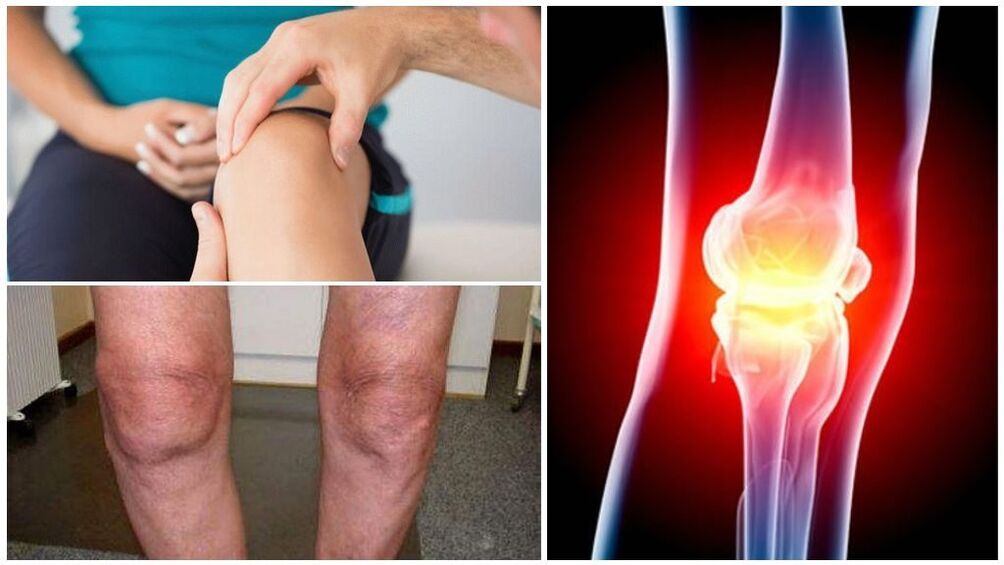
The severity of symptoms depends on the degree of knee joint disease.In the early stage, the pain rarely occurs and disappears after the patient walks a certain distance.In the later stages, symptoms of the disease appear constantly and do not subside even at night.
degree of joint disease
Doctors distinguish between two types of knee joint disease: primary and secondary.Primary osteoarthritis occurs in older patients and is associated with age-related physical changes.Secondary knee arthropathy is the result of injury, pathology, and developmental disorders.This type of knee joint disease can appear at any age.
The disease progresses in 3 degrees (stages):
- The first stage of knee joint disease is mild.Dull pain occurs irregularly.Most often, this condition occurs when the joint is under heavy load for a long time.In the first stage of the disease, there is no deformation of the joints and only slight swelling.
- In the second stage, symptoms of knee joint disease appear regularly.The nature of the pain changes: the discomfort becomes severe, severe and persistent.Other signs: Creaking, stiffness, and slight deformation of the joints.
- The third stage of knee arthropathy: the clinical manifestations intensify to the maximum.The pain becomes constant, gait is impaired, swelling increases, and the temperature of the joint area increases.
In severe cases, broken pieces of osteophytes (growths on the surface of bone tissue) may develop.This can lead to blockage of the joint, which manifests as acute pain.Therefore, the patient cannot move independently.
Most commonly, patients want to know how to treat grade 2 arthropathy.At this stage, the vast majority of patients consult a physician.However, you should not delay visiting a medical facility.The sooner you start treating knee joint disease, the better your chances of having good results.
Cause of disease
The occurrence of knee joint disease can be explained by a variety of factors.Doctors identify several causes of this disease:
- Injuries: Meniscal injuries, tibia fractures, ligament injuries.The pathology occurs 3-5 years after the injury, but in some cases occurs earlier, that is, after 3-4 months.
- Increased load on joints.Knee joint disease often affects professional athletes and people who perform strenuous physical labor.High-risk groups include people who start playing sports after age 40.They do not take into account age-related changes, which is why they place abnormal loads on the joints.
- Being overweight.Excessive weight will cause increased axial loads on the joint.The latter can lead to microtrauma, meniscus damage, and ligament rupture.The greater a patient's weight, the higher their risk of developing the disease.
- Past illnesses.Conditions that can cause knee arthritis over time include psoriasis, rheumatoid or reactive arthritis, gout, and ankylosing spondylitis.
- genetic factors.The disease is caused by a genetically determined weakening of the ligamentous apparatus.
Doctors have identified several other causes: metabolic disorders, congenital anomalies, fragile capillaries, circulatory system disorders, hormonal and endocrine system disorders, and old untreated injuries.
prevention
Preventing knee arthritis includes a group of measures:
- Maintain optimal weight through proper nutrition and moderate physical activity;
- Drink 1.5-2 liters of clean water every day;
- Be careful when exercising;
- If you experience discomfort in your knee area, seek medical attention immediately.
Experts recommend considering the individual needs of bone and cartilage tissue when formulating a diet.It is strictly forbidden to follow a diet based on the rejection of certain foods, such as grains.This may lead to metabolic disturbances and subsequent pathology of the musculoskeletal system.
How to treat knee arthritis at home?
To get rid of knee joint disease at home, you need comprehensive treatment.Treatment includes medication, diet, and physical therapy procedures.Massage of the joints is equally important and should be entrusted to a medical professional.Self-medication may worsen the condition.
drug treatment
Before treating knee osteoarthritis, you should know how to relieve knee pain.Medication is the main part of treatment and is designed to eliminate pain and restore cartilage tissue.
Drugs to Treat Arthropathy
To combat inflammation and related discomfort, doctors may prescribe nonsteroidal anti-inflammatory drugs (NSAIDs).This is a group of drugs with complex effects: relieving pain, soothing inflammation, and lowering body temperature.When treating knee joint disease, it can be injected intravenously or intramuscularly.
Another class of pain relievers are COX-2 NSAIDs.These drugs have similar therapeutic effects, but their side effects are milder.This group of drugs can be used to relieve pain for several months.
Painkillers help relieve pain but do not affect the cause.To treat knee joint disease, you need to take chondroprotectants, hyaluronic acid, ointments and other medications prescribed by a specialist.
chondroprotectant
Chondroprotectants are a group of drugs used to repair cartilage tissue and provide symptomatic treatment of osteoarthritis.This group of preparations is made of animal or plant raw materials, hyaluronic acid, collagen, and chondroitin sulfate.The latest generation of drugs are combinations of the listed substances.They are also supplemented with polyunsaturated fatty acids and vitamins.
Chondroprotectants are available in gel, ointment, tablet, and injection forms.
ointment
Ointments, creams and gels are suitable products for application.They have many uses:
- Warm the affected area;
- Calms inflammation;
- Activates local blood circulation and disperses pain.
hyaluronic acid
Hyaluronic acid is a substance that is part of epithelial tissue, nervous tissue, and connective tissue.Preparations based on this component act on the joints in the same way as natural joint lubrication, which is why they are given a second name - "liquid prostheses".
It forms a protective film on the surface of damaged tissue.This helps prevent further destruction of cartilage tissue and improves the gliding of surfaces in contact with each other during movement.
compress with medication
For increased effectiveness, ointments and solutions can be used in the form of compresses.Apply ointment, cream, or gel to the affected area with a napkin and secure with a bandage.Place a layer of plastic wrap on top and cover with cotton cloth.You can keep this compression on for no more than an hour.
folk remedies
The combination of traditional medicine and traditional medicine has excellent results.
rub and bath
The rub method involves rubbing a mixture of drug solutions onto the affected skin.The goal is to improve blood flow, help warm the sore area and distract the patient from pain.It is recommended to combine this method with a sauna or hot bath.First, you need to warm your body with hot water or a steam room in a hammam, and then apply the mixed solution to the painful area.
Infusions and decoctions
Infusions and decoctions can help relieve pain and improve the condition of patients in the early stages of knee joint disease.To relieve symptoms, use the following folk remedies: black bean herbal tea, lemon, garlic and nettle infusion, and cow's hoof soup.
compression
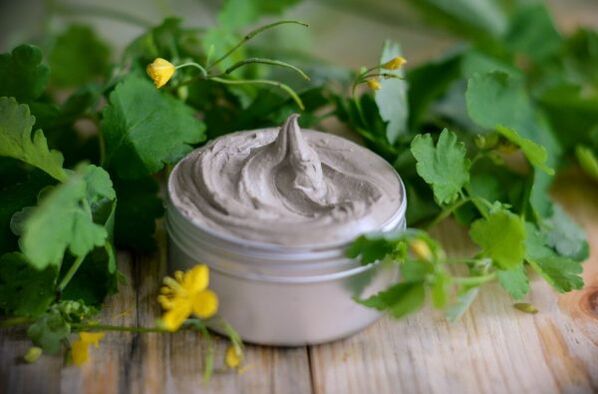
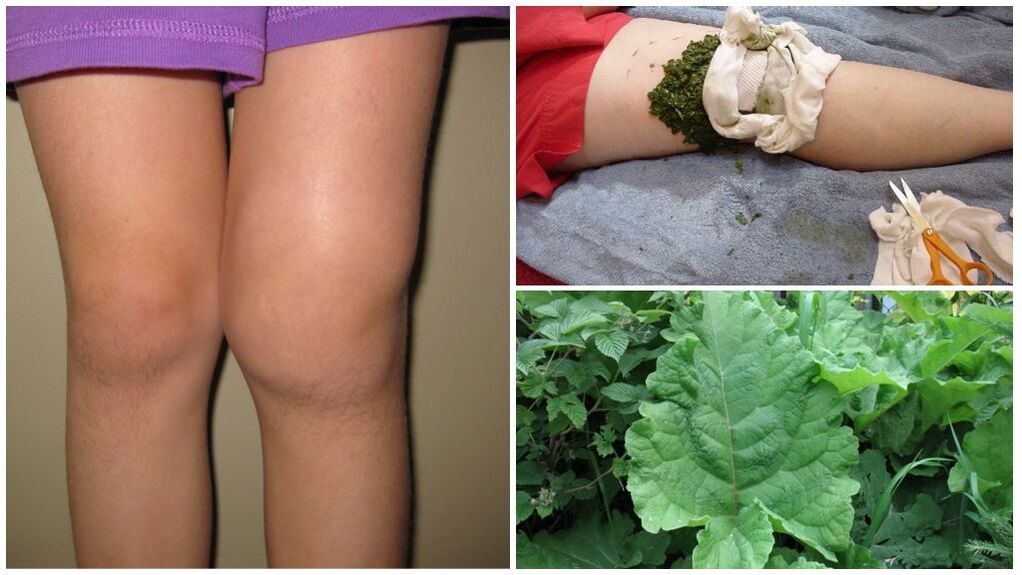
You can make your own compresses based on natural ingredients.They are performed in the same way as wrapping with ointments and solutions.You can use natural honey, clay, camphor oil, and young dandelion leaves as a base.This compress can be left overnight.
Exercise therapy and procedures
therapeutic gymnastics
Knee exercises at home are one of the most effective ways to self-treat this condition.Patients with worsening knee joint disease should not perform physical therapy exercises.You should only exercise during periods when you have little to no pain and no restrictions on your mobility.
therapeutic massage
For gonarthrosis, experts allow self-massage of the knee joint. In order for the massage technique to give the expected result, it is important to do it correctly. The knee joint massage technique is as follows:
- Sit in a chair with your knees bent at a right angle.To make it more comfortable, place a bench or small chair under your feet.
- During the process, one hand should be behind the knee and the other in front.
- There are many ways to massage your knees: rub with the edges of your palms, make your hands into fists, or stroke them in gentle circles with your fingertips.
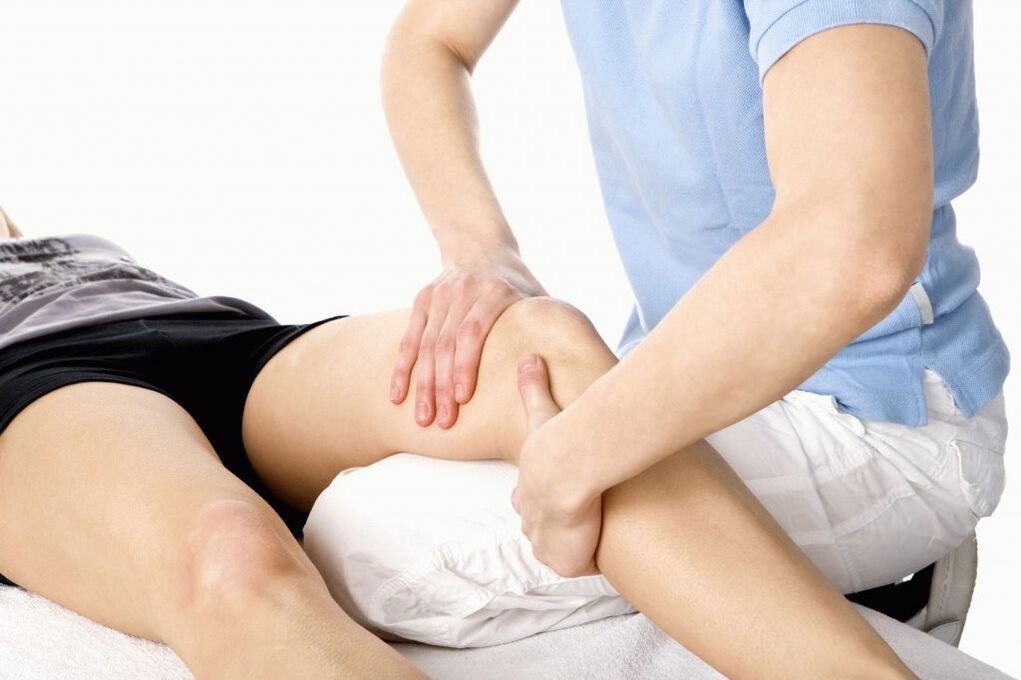
Experts recommend massage of the knee for arthrosis at home up to 5 times a day. The total duration of the procedure is up to 15 minutes. Massage contraindications: acute stage of disease, bleeding, vascular thrombosis, elevated body temperature, fever.
heat treatment
This is an effective treatment method that is used in conjunction with other methods. The procedure is performed after the acute stage of gonarthrosis has subsided. This treatment regimen is designed to dilate blood vessels, activate metabolic processes, accelerate regeneration and increase joint mobility.Elimination of pain is another bonus that thermal procedures provide.
Magnetic therapy device
There is a device that emits a magnetic field that comes into contact with charged particles in the body and accelerates metabolic processes. Therefore, it stimulates the repair of cartilage tissue, increases the production of natural lubrication, and improves metabolic processes.
The device is often used in medical institutions and sanatoriums. The device can also be used for treatment at home.The kit includes detailed operating instructions.
food
People with knee problems need to lose excess weight and eliminate harmful foods from their diet.The following two tables can help you lose weight and eat joint-healthy foods.
Useful and forbidden foods
When treating joint disease, doctors recommend maintaining a normal weight and following the following diet:
| health products | Disable product |
|---|---|
|
|
You need to eat small amounts (up to 300 grams) frequently.The last meal should be no later than 2-3 hours before bedtime.

Diet Examples
Menu example:
| breakfast | Lunch | Afternoon tea snacks | dinner | late dinner |
|---|---|---|---|---|
|
Pork leg aspic – 250 g. | One cup of kefir – 250 ml. |
|
Chicken breast – 80 g. |
You can add any allowed product to the menu.The main rule is not to overload the body with too much food and to eat on time.